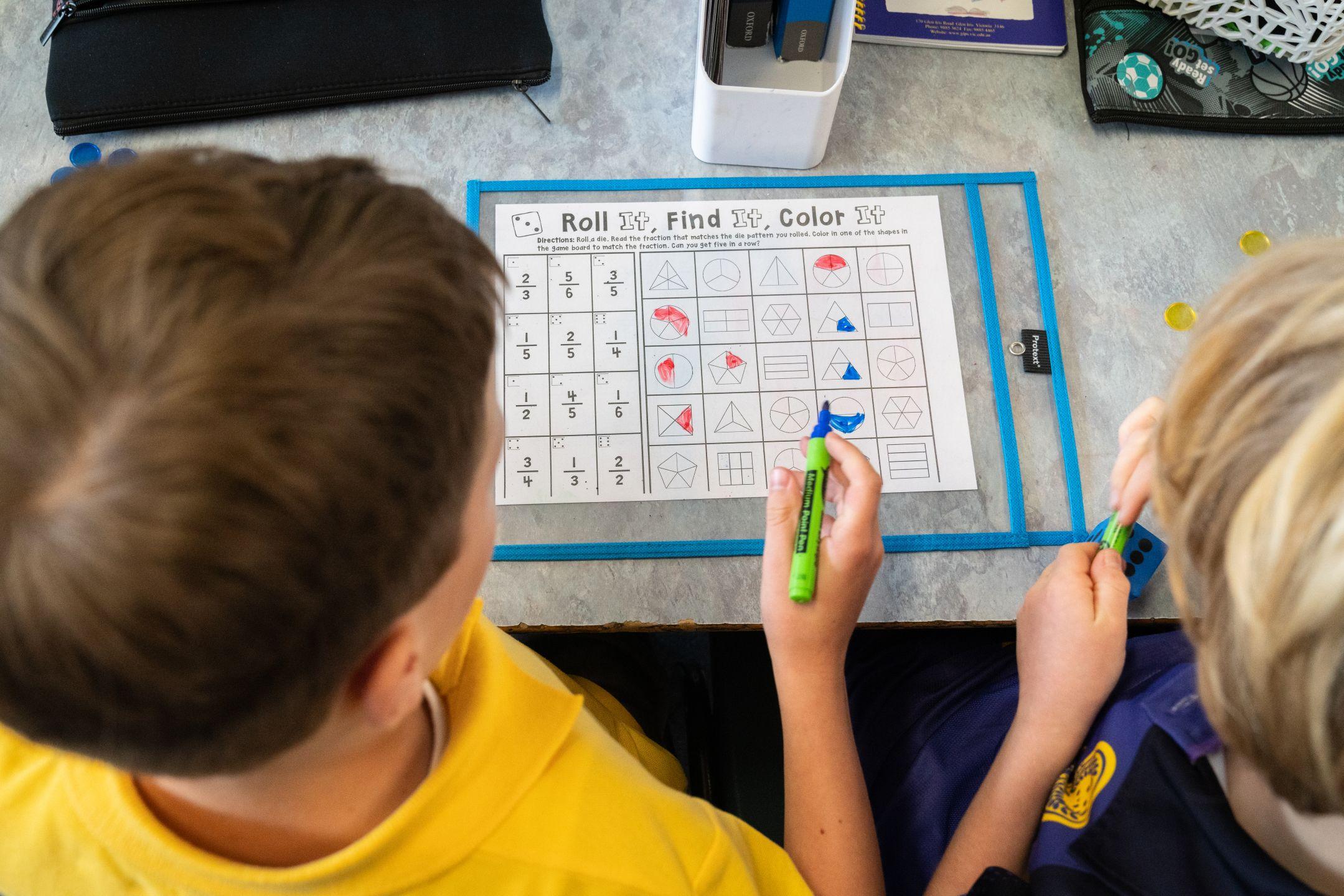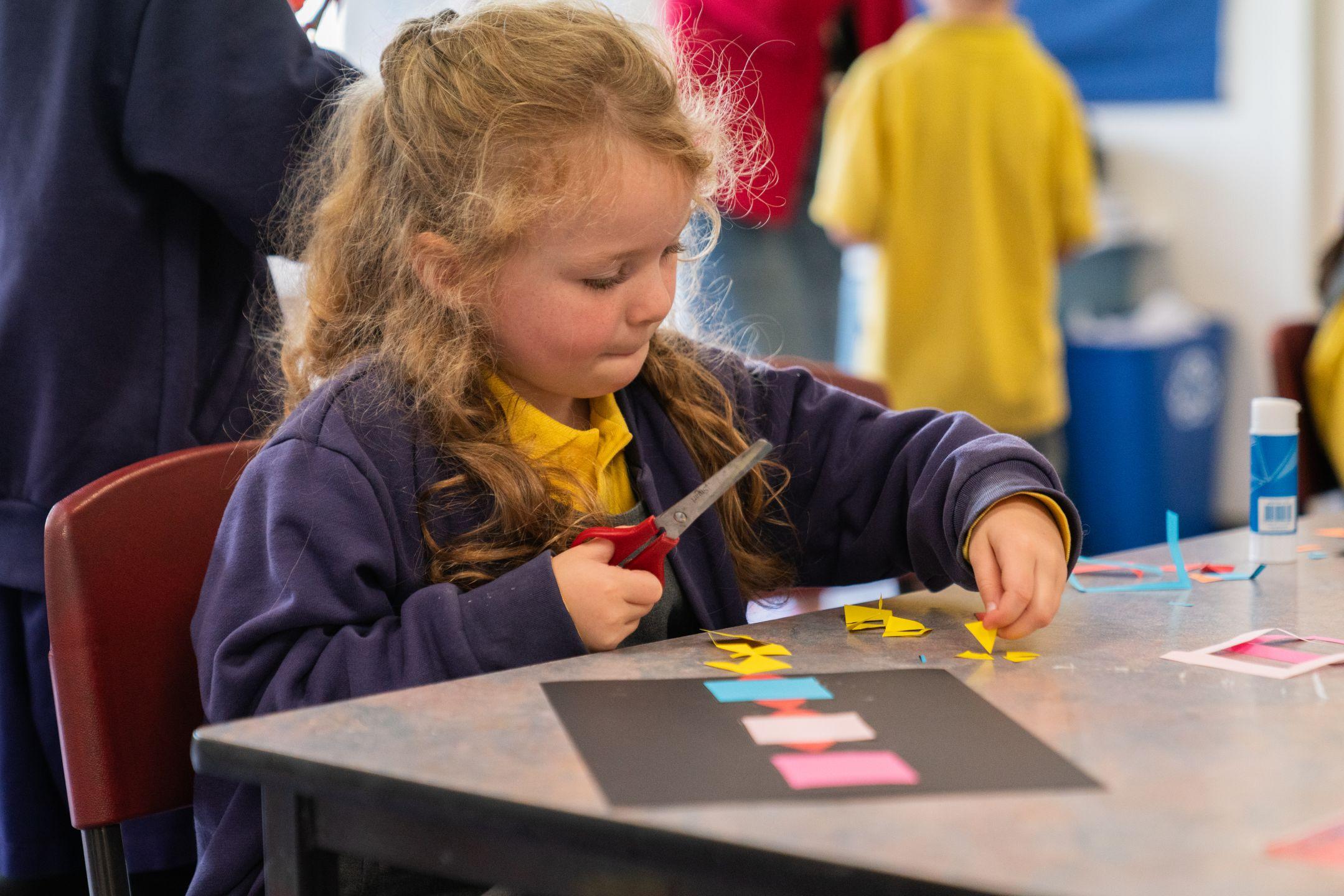
At GIPS, we intend to focus our attention on developing sophisticated and refined mathematical understanding across all year levels with a strong focus on mathematical conceptual understandings targeted at every child’s point of need.
Under the structure of the Victorian Curriculum, across all year levels GIPS follows the big ideas, a student-centred approach focused on mathematical concepts that link to numerous mathematical understandings. The big ideas provide a framework for our students to build understanding by connecting related ideas and support development of the understanding in number from early to advanced concepts. Our curriculum allows students to deeply build number sense and it enriches student mathematical thinking.
“One of the main aims of school mathematics is to create mental objects in the mind’s eye of children which can be manipulated flexibly with understanding and confidence.” - Professor Dianne Siemon, RMIT University
The big ideas focus on helping students understand the deeper concepts behind math, rather than just memorising rules or procedures. These include things like recognising patterns, understanding numbers and their relationships, and learning how to solve problems in different ways. One of the key ideas is the idea of "structure": understanding how numbers and operations work together, like how addition and subtraction are related or how multiplication can be seen as repeated addition. Another important concept is "reasoning," where students learn how to think logically and justify their answers. By focusing on these big ideas, students develop a stronger, more flexible understanding of math that helps them apply it to real-life situations, rather than just learning isolated facts. This approach helps children become more confident and capable problem-solvers in the future.
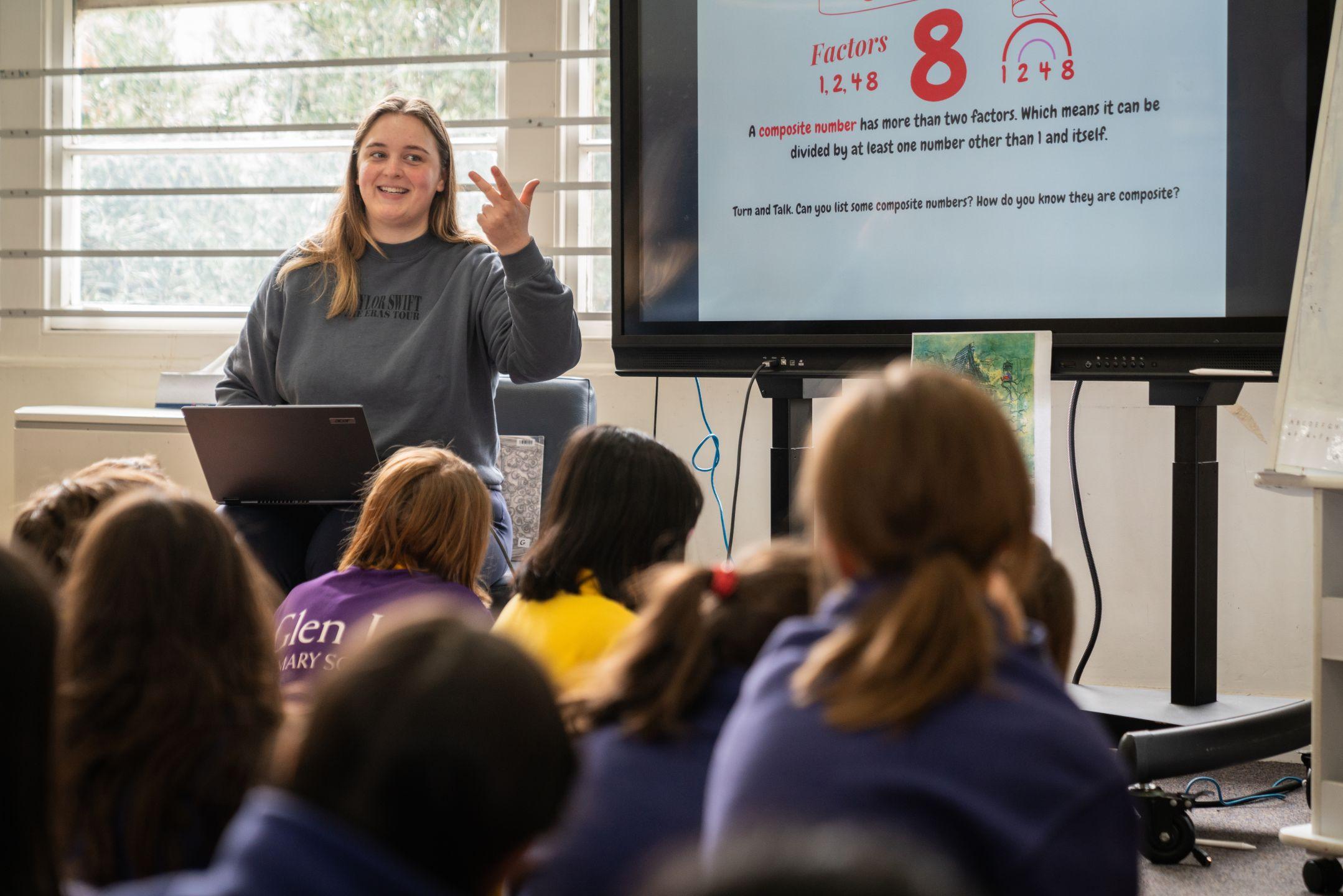
In primary school mathematics, big ideas are the key understandings that help students make sense of mathematical concepts and see connections between them. Rather than learning isolated skills, students develop deep understanding through exploring patterns, relationships and ways of thinking mathematically. Big ideas provide a foundation for students to build confidence, apply their learning in different contexts and become flexible problem solvers.
One important big idea is number sense, which includes understanding how numbers work, recognising patterns and developing efficient strategies for calculating. Students learn to trust the count, understand place value and make connections between addition, subtraction, multiplication and division. As their understanding grows, students are able to reason about numbers, estimate and solve problems with increasing accuracy and confidence.
Trusting the count is a foundational big idea in early mathematics that helps students understand that numbers represent a quantity that can be counted accurately and consistently. Students learn that each number said in a count matches one object, that numbers must be counted in a stable order, and that the final number counted tells us how many there are altogether. Developing trust in the count supports children to count forwards and backwards, recognise quantities without counting each item individually, and understand that numbers can be organised, compared and combined in meaningful ways.
Another big idea is place value. Place value is the understanding that the position of a digit determines its value. As students develop place value knowledge, they learn that our number system is based on groups of ten and that numbers can be represented in different ways using ones, tens, hundreds and beyond. This understanding helps students recognise patterns in numbers, compare quantities and use efficient strategies for addition, subtraction, multiplication and division. Strong place value understanding provides the foundation for future mathematical learning and supports students to think flexibly and confidently about number.